
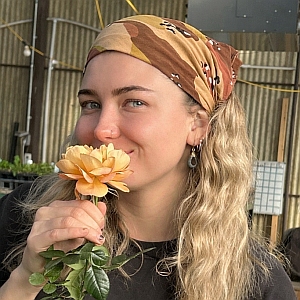
Roses have captivated human senses for thousands of years, and much of the allure is derived from their fragrance. I know that when I’m walking through the garden, I can’t help but stick my nose in every bloom I see. As I watch visitors to the greenhouse come in and do the same, I know I’m not alone. There’s something about the scent of a rose that transports my mind to memories of the past. One whiff and I can see my parents’ magnificent garden in my mind’s eye. For others, it may remind them of nature, or a grandparent, or maybe even a bouquet given to them by someone special.
The scent of a rose can be light and fresh, deep and spicy, fruity, citrusy, or even reminiscent of tea or honey. This remarkable diversity is not accidental. Rose fragrance is the result of complex biological processes inside the flower, shaped by genetics, chemistry, environmental conditions, and centuries of cultivation. Understanding how roses get their fragrance, and why some are more fragrant than others, reveals a fascinating interplay between plant and human biology.
In nature, fragrance is not produced for human enjoyment. Roses, like other flowering plants, evolved scent as a tool for survival and reproduction. The primary function of floral fragrance is to attract pollinators such as bees, beetles, and other insects. These pollinators are drawn to specific scent compounds, which signal the presence of nectar and pollen. As pollinators move from flower to flower, they transfer pollen, enabling fertilization and seed production.
Fragrance in roses is produced by specialized cells located primarily in the petals. These cells synthesize and release volatile organic compounds (VOCs), which easily evaporate into the air and create the scent we perceive. Fragrance is not from a single source but the combination of these oil-based compounds of alcohols and sugars. The highest concentration of these scent-producing cells is often found in the outer petal layers and at the base of the petals near the reproductive organs.
The production of fragrance typically peaks when the rose is fully open and ready for pollination. In many varieties, scent release is strongest in the morning, coinciding with peak pollinator activity. Temperature, humidity, and light levels all influence how strongly the fragrance is emitted. For instance, roses grown in full sun often produce stronger fragrance than those grown in shade. This ever-changing symphony of conditions helps to explain why scent is often so difficult to describe and is experienced differently by different people.
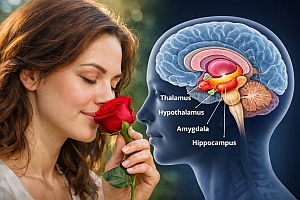
Speaking of noses, did you know humans have about 400 different types of smell receptors, but by combining them in patterns, we can detect thousands (possibly millions) of odors. Once the olfactory receptor in the nose is activated by a VOC, an electrical impulse is sent to the brain for interpretation. Interestingly, these impulses are processed by the amygdala (emotional center) and hippocampus (memory center) in the brain. This interpretive process explains why rose fragrance triggers memories and emotion.
When it comes to recommending fragrant roses, you can now see why it is a bit of a moving target. I’ll admit my olfactory receptors are not quite what they once were and working in a greenhouse is a bit like working in a wind tunnel (not great for fragrance), but we do have some remarkable roses that are consistently noted for their strong fragrance. The best way to discover roses with the most fragrance is by narrowing your search results by using the characteristic “Strong Fragrance” in the SHOP tab. We also curate a collection of roses known for their fragrance in the Special Collections tab under “Fragrant Roses”. Both are great resources.
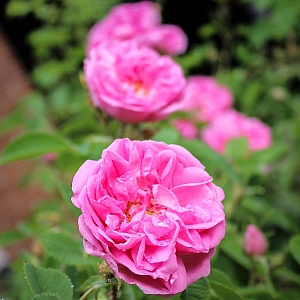
Many of my favorite fragrant roses are Old Garden Roses. In particular, the Damask Roses are renowned for their strong fragrance and correlated high oil content. Damask roses are one of the main commercial sources of rose oil (attar of roses) used in high-end perfumes. The famed Rose Valley of Bulgaria is covered in fields of the rose Kazanlik grown specifically for perfume production. Each year the region harvests about 11,000 tons of roses. Here are some other great fragrant Old Garden Roses to consider:
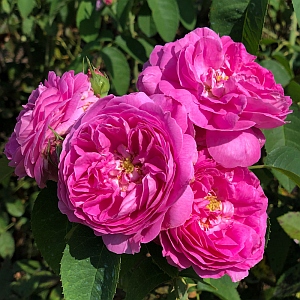
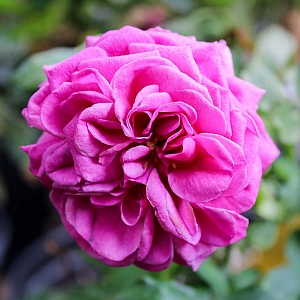
More and more, fragrance has become an important focus of modern rose breeding. However, breeding for a characteristic like fragrance is difficult because fragrance is controlled by a network of genetic and environmental factors. Breeders are left with an arduous process of trial and error, but once they hit on the right combination, the results can last for generations of new plants.
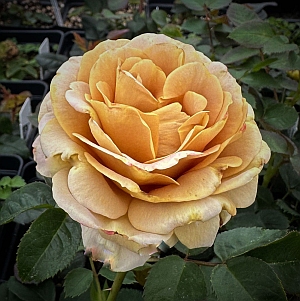
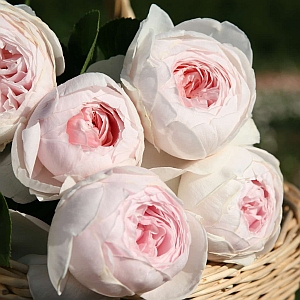
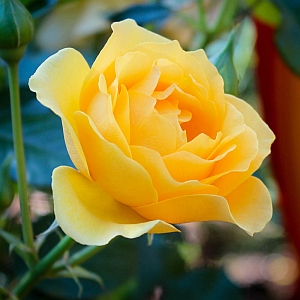
A great example is Weeks Roses’ Julia Child rose. For years, the Weeks breeding program aimed to breed a rose that checked all the boxes of desirable rose characteristics. Once they found this gorgeous yellow rose with vigor, outstanding habit, disease resistance, repeat blooming, AND fragrance, they knew their genetics in Julia Child were one of a kind. As a result, there are now over 110 different varieties in commerce that list Julia Child as a parent. In addition to Julia Child, there are a number of other outstanding modern roses with strong fragrance. Here are some of my favorites:
Without question, fragrance is one of the quintessential qualities of a rose; however, keep in mind the nuanced and fleeting nature of scent. One individual’s intense experience may not be quite so big or evocative for someone else. You may come back to the same rose at a different time and experience a different scent blend and intensity. My advice is to keep sticking your nose in your roses and enjoy them deeply. You may never know exactly what scent you will find, but trust, they are worth it.