
Canada officially became a self-governing dominion on July 1, 1867, through Confederation. That union first joined four eastern provinces, Ontario, Quebec, Nova Scotia and New Brunswick, and while full independence would be a slow process spanning many decades, the nation of Canada had its start. The following year, in 1868, the newly formed government founded the Department of Agriculture, known today as Agriculture and Agri Food Canada. It was an acknowledgment of just how important agriculture was to the economic, social and cultural development of the young country. From its inception, the department established a system of experimental farms across Canada that laid the groundwork for testing cold tolerant plants that could thrive in the country’s often brutal growing conditions. That mission, building a sustainable, adaptable and profitable agricultural industry, remains the department’s focus to this day.
Let’s face it, roses probably aren’t the first thing that comes to mind when you think of Canada. However, Canada actually has a long and rich history of rose growing. Several species roses grow naturally throughout Canada’s varied and diverse environment, including Rosa acicularis, Rosa blanda, Rosa nitida, Rosa nutkana, Rosa arkansana and Rosa woodsii. Long before any formal breeding program existed, Indigenous peoples already had deep, practical relationships with these wild roses, using the hips for food and medicine. When European settlers arrived, they brought garden roses with them too, many from France and elsewhere in Europe. Many of these early imports were hardy old garden roses coming from similar European climates, and they adapted quickly to living in Canada. As garden aesthetics shifted toward modern roses, especially tea and hybrid tea roses, at the end of the 19th century, trouble cropped up. Many of these plants were a poor match for growing in Canada as their genetic origins were as tropical plants coming from India and China. This mismatch of plant and climate was emblematic of the problem Agriculture Canada was trying to solve.
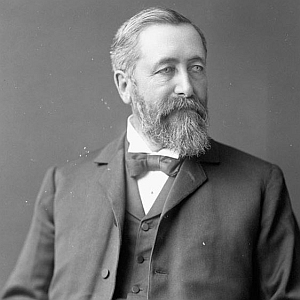
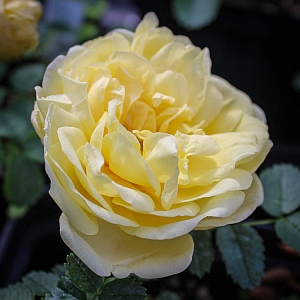
Formal rose breeding in Canada really began with Dr. William Saunders around 1900. He was the first director of the Central Experimental Farm in Ottawa, and under his direction the farm began a government funded program to breed and test hardy plants. Dr. Saunders emigrated to Canada with his family from England back in 1848, as a boy of twelve. He had no formal scientific education, started working as a pharmacist’s apprentice. and eventually rose to become president of the Canadian Pharmaceutical Society. His interest in plants, especially their medicinal properties, led him into selective plant breeding with an eye toward practical agricultural applications for Canada. Agriculture was a second career for Dr Saunders and roses were a side project of that new endeavor. He began making some interesting hybridizing crosses of hardy species roses, and one of his successes is considered the first true “Canadian” rose: Agnes. Agnes was commercially introduced in 1922, after Dr. Saunders’ death in 1914, and came from a cross between Rosa rugosa and Rosa foetida persiana. The result was a battle-axe of a rose, tough as nails, with unique butter yellow blooms and all the hardiness you’d expect from a rugosa parent. He named it after his wife, Sarah Agnes, and we still grow it today.
After his death, Dr. Saunders’ work was carried on by another self taught plant breeder, Isabella Preston. Preston joined the Central Experimental Farm in 1920, and like Dr. Saunders, roses were something of a side interest for her. Her real focus was lilacs, lilies and iris, where she made her biggest mark. Still, she released about 20 different rose varieties through the 1920s and 1930s. Today only one of them is commonly available in commerce, ‘Carmenetta.’ Introduced in 1923, it’s a cross of Rosa glauca and Rosa rugosa, with deep pink single flowers and handsome red toned foliage. (As an aside, I would love to collect this rose. If you have a known source for it, please let me know: EMAIL) After Preston’s retirement, the government’s rose breeding program went dormant for decades. It is important to remember that the Canadian Rose Breeding Program has never been a single entity. It has had starts and stops, featured many different people with diverse opinions and styles, sometimes the Government is heavily involved and sometimes it is up to independent growers to move the process forward.
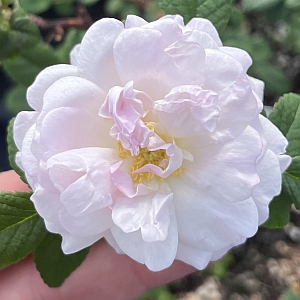
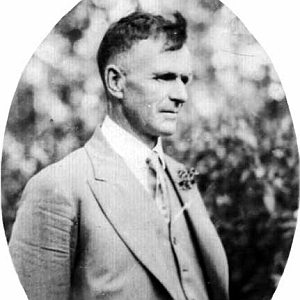
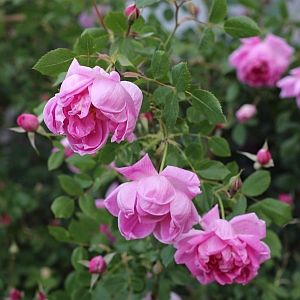
During the quiet stretch following Isabella Preston’s retirement, several independent rose breeders across central Canada kept pushing hardy rose development forward on their own. The most prolific of the bunch was Dr. Frank Leith Skinner. Born in 1882 in Scotland, he emigrated with his family to the Dropmore district of Manitoba in 1895. Located 450km northwest of Winnipeg, this part of Canada sees fewer than 90 frost free days a year and makes for an ideal proving ground for hardy plants. Working entirely outside any government program, Dr. Skinner opened the Manitoba Hardy Plant Nursery on his homestead in 1925, later renamed Skinner’s Nursery Ltd. in 1949, and went on to introduce roughly 144 new or improved plant varieties over his lifetime. His rose introductions include ‘Hazeldean,’ ‘Mrs. John McNabb,’ ‘Suzanne,’ and one of our own favorites here at High Country Roses, ‘Isabella Skinner,’ which we sell as ‘Victorian Memory.’ Dr. Skinner’s work was influential to later generations of breeders both in Canada and the United States. Renowned American breeder Dr Griffith Buck leaned heavily on his work as did Agriculture Canada when they restarted their breeding efforts in the 1960s.
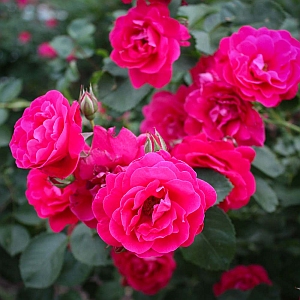
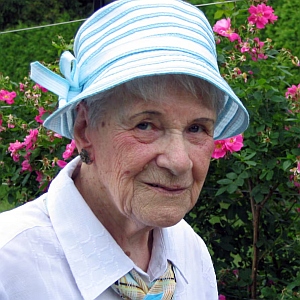
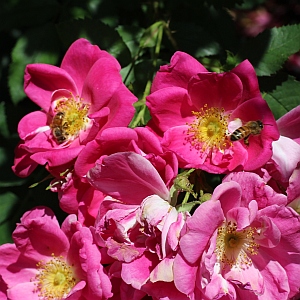
The rejuvenation was due largely to the efforts of one woman, Dr. Felicitas Svejda. Born in Vienna, Austria, Svejda immigrated to Canada in 1953. She held a PhD in agricultural science and engineering and had worked extensively as a researcher in Austria and Sweden. Dr. Svejda came to Canada specifically to work on cereal crop development at the Central Experimental Farm, but her supervisors at the time would not put a woman into that role, so she was placed as a statistician instead. Although she was working a job that did not utilize her immense capabilities, Dr. Svejda was undeterred and persisted. In 1961 she was assigned to the Ornamental Plant Division, where she took over the long dormant rose breeding program.
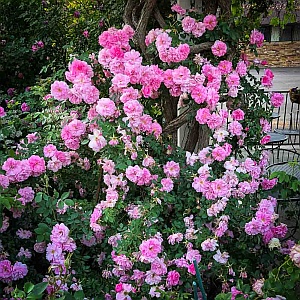
Svejda started from square one. In her obituary in The Globe and Mail, she was quoted as saying, “I knew nothing about roses, this was a blessing because I had no preconceived notion. I had to learn.” And learn she did. She studied rose genetics carefully and grounded every breeding decision in scientific data, drawing on both her Agriculture Canada predecessors and the independent breeders who came before her. Her major breakthrough came when she began crossing many of these hardy lines with Rosa kordesii, a hardy pillar rose developed in Germany. She also believed strongly in testing under genuinely tough conditions across the country, which meant forsaking many common growing practices such as winter protection, fertilizing, even regular watering. What survived that gauntlet turned out to be exceptionally strong, healthy plants. In tribute, she named her roses after Canada’s own hardy explorers.
Today Dr. Svejda is known as the mother of the Canadian Explorer roses and driving force behind expansion of Canadian roses in commerce. Many of her varieties are still commonly found in nurseries around the world: ‘Champlain,’ ‘Henry Hudson,’ ‘John Cabot,’ ‘Jens Munk,’ ‘Henry Kelsey,’ ‘Alexander Mackenzie,’ ‘William Baffin,’ and ‘Martin Frobisher,’ among others. In total, 22 varieties bred under her direction made it into commerce during her career. Dr. Svejda led the program for nearly 25 years, retiring around 1986. Her retirement brought significant change to the Canadian Breeding Program, much more than just leadership at the top.
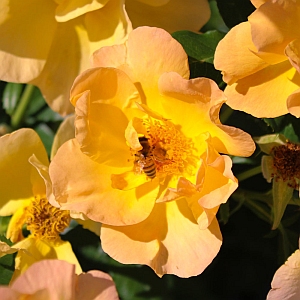
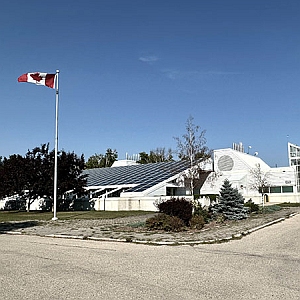
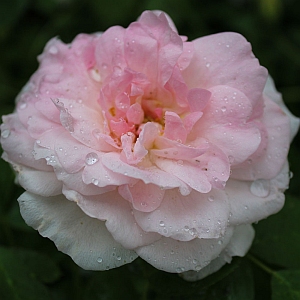
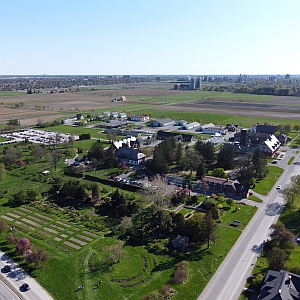
Chief among those changes was a change of scenery. Agriculture Canada’s ornamental breeding work, based in Ottawa for decades, was transferred to two other research stations: St. Jean/L’Assomption, Quebec, and the Morden Research Station in Manitoba. Each station specialized regionally. Morden’s exposed prairie climate made it an ideal testing ground for the hardiest roses. Researchers led by Dr. Henry Marshall, leaned heavily on Rosa arkansana genetics, which gave them incredible cold tolerance. The tough roses tested in Morden became known as the Parkland Series and gave us some of the all time Canadian classics: ‘Morden Centennial,’ ‘Morden Blush,’ ‘Morden Sunrise,’ ‘Morden Fireglow,’ ‘Morden Snowbeauty,’ ‘Cuthbert Grant,’ ‘Winnipeg Parks,’ ‘Hope for Humanity,’ ‘Adelaide Hoodless,’ and ‘Prairie Joy,’ to name just a few. Over 40 introductions originated from the Morden Research Station and to this day, Morden Sunrise remains one of our best selling plants.
Meanwhile, back in the east, the research station in L’Assomption picked up Dr. Svejda’s unfinished work from Ontario. While not nearly as prolific as their counterparts in Morden, this group grew on and finished many roses that had been bred and trialed in Ottawa, among them ‘Frontenac,’ ‘Simon Fraser,’ and ‘George Vancouver.’ All solid additions to the Explorer series of roses.
As we have seen with other Canadian rose breeding efforts, these programs eventually came to an end as well. The Morden Research Station closed in 2010, and breeding rights passed to a private consortium tied to the Canadian Nursery Landscape Association. This group continued breeding work in Vineland, Ontario and what emerged from that new arrangement is known as the Canadian Artist series. It’s a small collection, with just four varieties, but every one of them carries the tradition of the Canadian program forward: exceptionally hardy plants, good disease resistance, and active blooming all season long. Those four varieties are ‘Emily Carr,‘ ‘Felix Leclerc,’ ‘Bill Reid,’ and ‘Campfire,’ each one named in homage to Canada’s rich artistic heritage.
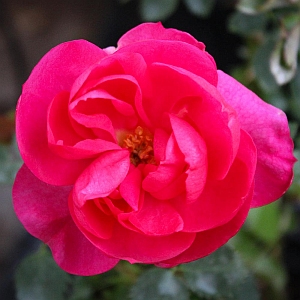
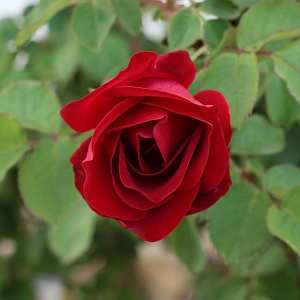
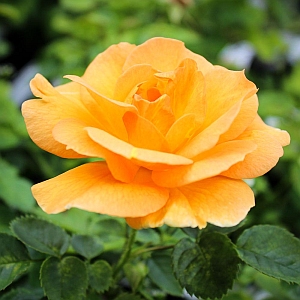
It is easy to read this history as a story that has come to an end, but I really don’t see it that way. At its origin, the Canadian Government provided funding, and the missional direction, to create the genetic foundation that resulted in a group of roses that would, not only survive, but thrive in Canada. That many of those roses have found commercial success outside of Canada is further testament to that solid foundation. Today, rose breeders around the world utilize Canadian genetics in their own work, perpetuating this legacy to new generations of roses. Canadian breeders like Brad Jalbert in British Columbia and Christian Bédard, who trained at Agriculture Canada before taking his expertise to Weeks Roses in the United States, are proof that Canadian rose breeding is still very much alive and influencing the roses we grow. Nature handed Canadian breeders a hard problem, brutal winters and short seasons. More than a century later, a handful of stubborn, curious people are still working the problem. It’s a legacy worth celebrating.